The Guide to Belgian Beers: What to Drink in Downtown Brussels
The Complexity of the Belgian Beer Menu
Visitors stepping into DownTown Brussels often pause when reviewing the drink menu. Located on Rue Henri Maus near Place de la Bourse, our sports bar features over twenty-five authentic Belgian beers. The sheer volume of Trappists, Dubbels, Tripels, Lambics, and Witbiers frequently creates decision paralysis for unfamiliar guests.
Belgian brewing represents centuries of microbiological experimentation and regional tradition. The categorization system relies on specific fermentation methods, historical gravity measurements, and proprietary yeast strains. Understanding these underlying mechanisms transforms a confusing list of names into a structured tasting experience. This guide breaks down the technical differences between major Belgian beer styles before you order your next round.
The Trappist Designation: Monastic Brewing
When discussing Belgian beer, the conversation inevitably centers on Trappist ales. "Trappist" does not denote a specific flavor profile or a single brewing style. It functions as a legally protected designation.
For a brewery to use the Authentic Trappist Product label, it must satisfy three strict criteria. The beer must be brewed within the physical walls of a Trappist monastery. The monks must directly supervise the production process. Finally, all profits must either sustain the monastic community or fund charitable causes.
Our fridges regularly stock several of these iconic beers, including Chimay Blue. Originally developed as a seasonal winter release, this dark ale carries a formidable 9% ABV (Alcohol by Volume). The flavor profile features heavy notes of dark fruit layered over a peppery yeast foundation.
The mechanism behind these complex flavors relies entirely on proprietary yeast strains. These monasteries have cultivated specific yeast cultures for generations. During primary fermentation, these yeasts produce unusually high levels of esters and phenols. Esters generate the fruity aromas. Phenols deliver the characteristic spice. This biochemical reaction explains why these beers taste incredibly rich despite containing no actual fruit additions.
Serving these beers too cold masks their complexity. We pour them warmer than standard lagers. Serving them between 10 and 12 degrees Celsius allows the volatile aromatic compounds to release properly from the liquid.
Decoding the Monastic System: Dubbels and Tripels
The terms "Dubbel" and "Tripel" appear frequently across our bottle list. These classifications stem from a historical system monks used to communicate beer strength to a largely illiterate medieval population. Brewers marked barrels with crosses to indicate the original gravity of the unfermented beer, known as wort. More crosses indicated a higher concentration of fermentable sugars. This naturally resulted in a stronger final product.
The Belgian Dubbel
A Dubbel, historically marked with two crosses, presents as a rich, dark amber or brown ale. The dark coloration does not originate from roasted malts. Instead, Belgian brewers utilize dark candi sugar.
This heavily caramelized beet sugar syrup serves a critical dual purpose in the brewing process. First, it imparts deep flavors of molasses and caramel. Second, because it ferments completely, it elevates the alcohol content without leaving a heavy sweetness in the body of the beer. Most Dubbels sit between 6% and 8% ABV. A Dubbel like Westmalle pairs effectively with savory food profiles due to these deep caramel notes.
The Belgian Tripel
Tripels, originally marked with three crosses, consistently surprise unfamiliar drinkers. They pour a bright, clear golden color. They appear light. However, they typically carry an ABV between 8% and 9.5%.
The brewing process involves using predominantly light pilsner malts combined with light candi sugar. The resulting beer is highly attenuated. This means the yeast has consumed nearly all the available sugars. This creates a dry finish, aggressive carbonation, and a heavily spiced profile driven almost entirely by the yeast.
The high carbonation scrubs the palate clean. This mechanical action makes a Tripel deceptively easy to drink given its high alcohol content. The carbon dioxide lifts the complex citrus and spice aromas out of the glass.
Witbier: The Spiced Wheat Ale
For daytime sessions or early sports fixtures, Witbier provides a distinctly different profile. "Witbier" translates directly to "white beer." The name derives from the suspended yeast and wheat proteins that give the liquid a pale, cloudy appearance. Unlike German wheat beers, which rely entirely on yeast to produce banana and clove flavors, Belgian Witbiers are actively spiced.
During the boiling process, brewers traditionally add crushed coriander seed and dried orange peel. Historically, Brussels and the surrounding regions sat along trade routes that brought exotic spices to Northern Europe. Brewers incorporated these ingredients to balance the natural tartness of early brewing methods.
Poured fresh from the tap, a Witbier is crisp, slightly tart, and highly carbonated. The wheat provides a soft mouthfeel. With a manageable ABV typically around 4.5% to 5%, it functions as an ideal choice for extended sessions.
Lambics and Gueuze: Spontaneous Fermentation
Lambics represent an entirely different approach to brewing. This style is unique to the Senne River valley surrounding Brussels. Most commercial beers globally are fermented using carefully isolated yeast strains pitched into sterile environments. Lambic brewers utilize wild fermentation.
They pump hot, unfermented beer into massive, shallow cooling vats called coolships. These vats are typically located in the rafters of the brewery. Brewers open the windows, allowing the ambient night air to circulate over the liquid. The air in this specific region carries wild yeast, specifically Brettanomyces bruxellensis, and natural bacteria. These microorganisms settle into the liquid and initiate a spontaneous fermentation process. This process can last for years in oak barrels.
The resulting unblended Lambic is flat, sharply acidic, and earthy. To make the beer more approachable and carbonated, brewers blend young Lambic with aged Lambic. The unfermented sugars in the young beer reignite fermentation when introduced to the complex yeast profile of the old beer.
This blended style is known as Gueuze. A traditional Gueuze pours with high effervescence. It is bone dry, highly acidic, and layered with notes of green apple and oak. It offers a sharp contrast to standard lagers and ales.
The Architecture of the Pour: Glassware Geometry
The sensory experience of Belgian beer depends heavily on the specific glassware used. At DownTown Brussels, each beer is served in its corresponding branded glass. The geometry of the glass directly dictates how the liquid presents itself.
The Chalice and Goblet
Heavy Trappist ales and Dubbels are served in wide-mouthed chalices. These beers are intensely aromatic but generally lower in carbonation. The wide bowl allows the alcohol to evaporate slightly. This carries the complex esters directly to the nose. The shape also forces larger, slower sips.
The Tulip
Tripels and strong golden ales require tulip glasses. These glasses feature a bulbous bottom that tapers inward before flaring out at the rim. The bulbous bottom allows the drinker to swirl the beer safely, releasing carbonation. The inward taper traps those aromas, concentrating them at the rim. The outward flare supports a thick head of foam.
In Belgian beer culture, a thick, persistent head of foam is required. It acts as a protective layer. It prevents the volatile aromatic compounds from escaping too quickly and protects the beer from oxidation. Many glasses feature nucleation points. These are tiny laser-etched patterns at the bottom of the glass. These rough spots give dissolved carbon dioxide a place to gather and form bubbles. This creates a continuous stream of carbonation that maintains the foam from the first sip to the last.
Approaching the Menu at DownTown Brussels
Navigating this variety requires a logical approach to avoid palate fatigue. The high alcohol and intense spices of stronger ales dull taste receptors quickly. Starting a session with a heavy 9% Tripel makes it difficult to taste the nuances of a lighter Witbier later in the day.
A structured tasting begins with lighter options. A crisp Witbier or a standard Belgian Pilsner on tap works best early. As the session progresses, transitioning to complex amber ales or a Dubbel makes sense. Tripels and heavy Trappists are best reserved for later.
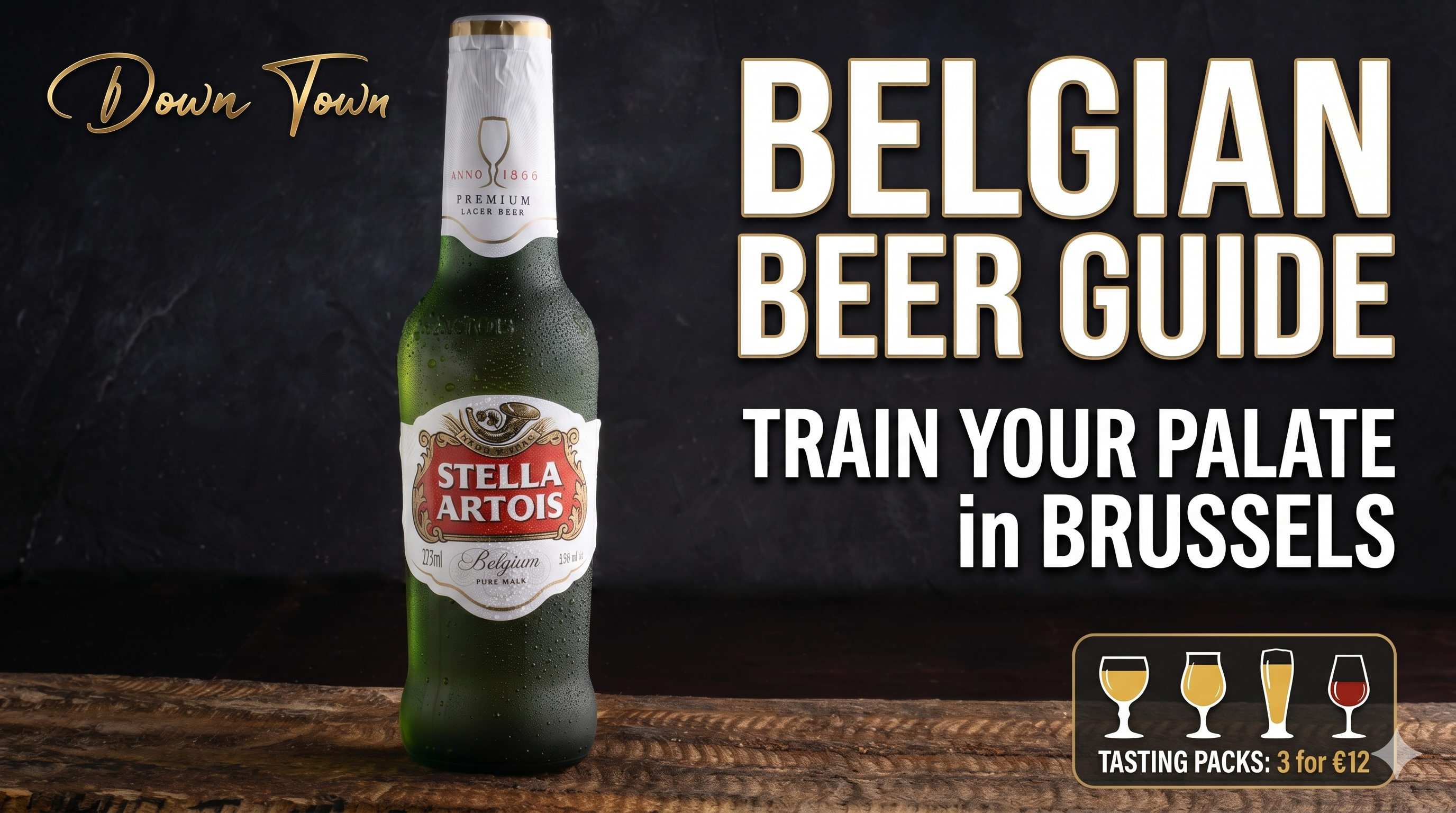
The pricing structure during our Happy Hour facilitates this exploration. Between 14:00 and 22:00 daily, the bar offers three bottled beers for twelve euros. This allows groups to order a Dubbel, a Tripel, and a fruit Lambic for a direct comparative tasting.
DownTown operates as a central venue for live sports and authentic beer in the city center. With twenty screens showing major fixtures, the environment is highly active. However, the technical standards of beer service remain strict. The beer is poured correctly, in the proper glass, at the correct temperature. With a baseline understanding of these styles, selecting the right Belgian beer becomes a deliberate choice rather than a random guess.